
Graphite vs Quartz Crucibles: Which Is Best for Melting Precious Metals?
Choosing the Right Crucible: Graphite vs Quartz for High-Temperature Melting
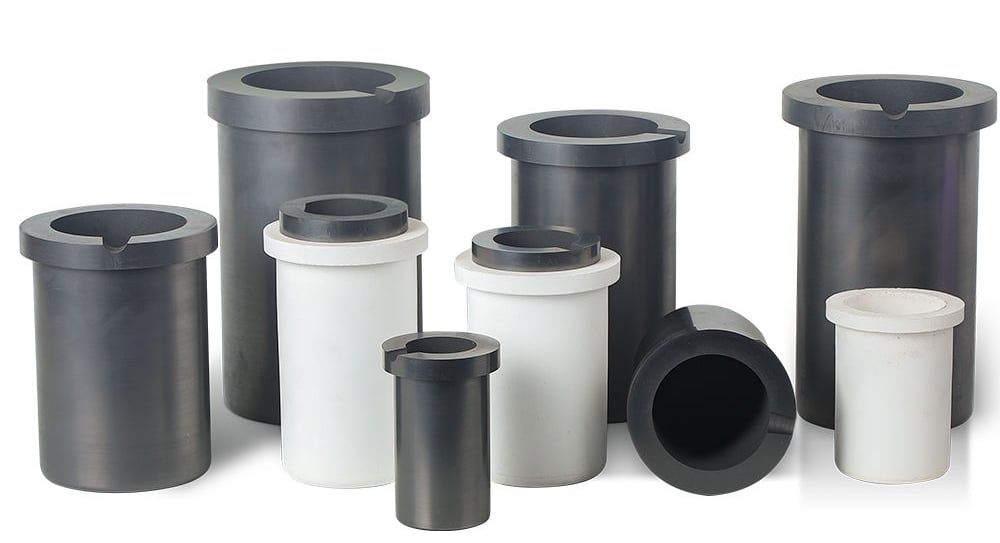
Graphite vs Quartz Crucibles: Key Differences & Best Uses for High-Temperature Melting
Crucibles are essential components in metallurgy and materials science, designed to melt and hold materials at extreme temperatures. Among the most widely used options are quartz and graphite crucibles, each offering distinct properties for different industrial applications. Understanding their strengths and limitations is critical for selecting the right crucible for your melting process.
Quartz Crucibles: Features and Applications
Quartz crucibles are manufactured from high-purity silica, delivering reliable thermal resistance for moderate‑high temperature applications—typically up to 1,000 °C. They are commonly used in laboratories, glass manufacturing, and ceramic production.
Their greatest benefit is exceptional chemical inertness, meaning they do not react with most molten materials. This makes them ideal for melting contamination‑sensitive substances. Quartz crucibles are also highly transparent, allowing operators to clearly observe the melting process during experiments and precision work.
However, quartz crucibles are relatively brittle and sensitive to rapid temperature changes, requiring careful handling to avoid cracking or breakage.
Graphite Crucibles: Advantages and Industrial Applications
Graphite crucibles excel in extreme high-temperature environments, withstanding temperatures above 2,000 °C. This makes them the top choice for melting precious metals including gold, silver, platinum, and other high-value materials.
Featuring much higher thermal conductivity than quartz, graphite crucibles heat evenly and reduce melting time, improving efficiency in industrial production. They also offer strong heat retention and excellent thermal shock resistance, allowing them to withstand sudden temperature fluctuations without damage.
This durability and performance make graphite crucibles highly reliable for metal casting, refining, and continuous high-temperature operations.
Conclusion: The Best Crucible for Precious Metal Melting
Both quartz and graphite crucibles serve important roles in high-temperature applications. However, graphite crucibles stand out as the superior solution for melting precious metals.
Their ability to endure extreme heat, strong thermal shock resistance, low thermal expansion, and efficient heat retention deliver consistent, high-quality results in industrial and precious metal processing.
Ultimately, the ideal crucible depends on your operating temperature, material type, and application requirements. For precious metal melting and heavy-duty industrial use, graphite crucibles remain the most practical and high-performance choice.
Copyright © 2025 MIG-madeingraphit- All Rights Reserved.

